ID
 EN


Bio Farma and Indonesian FDA Discuss the Use of AI in Polio Vaccine Quality Testing
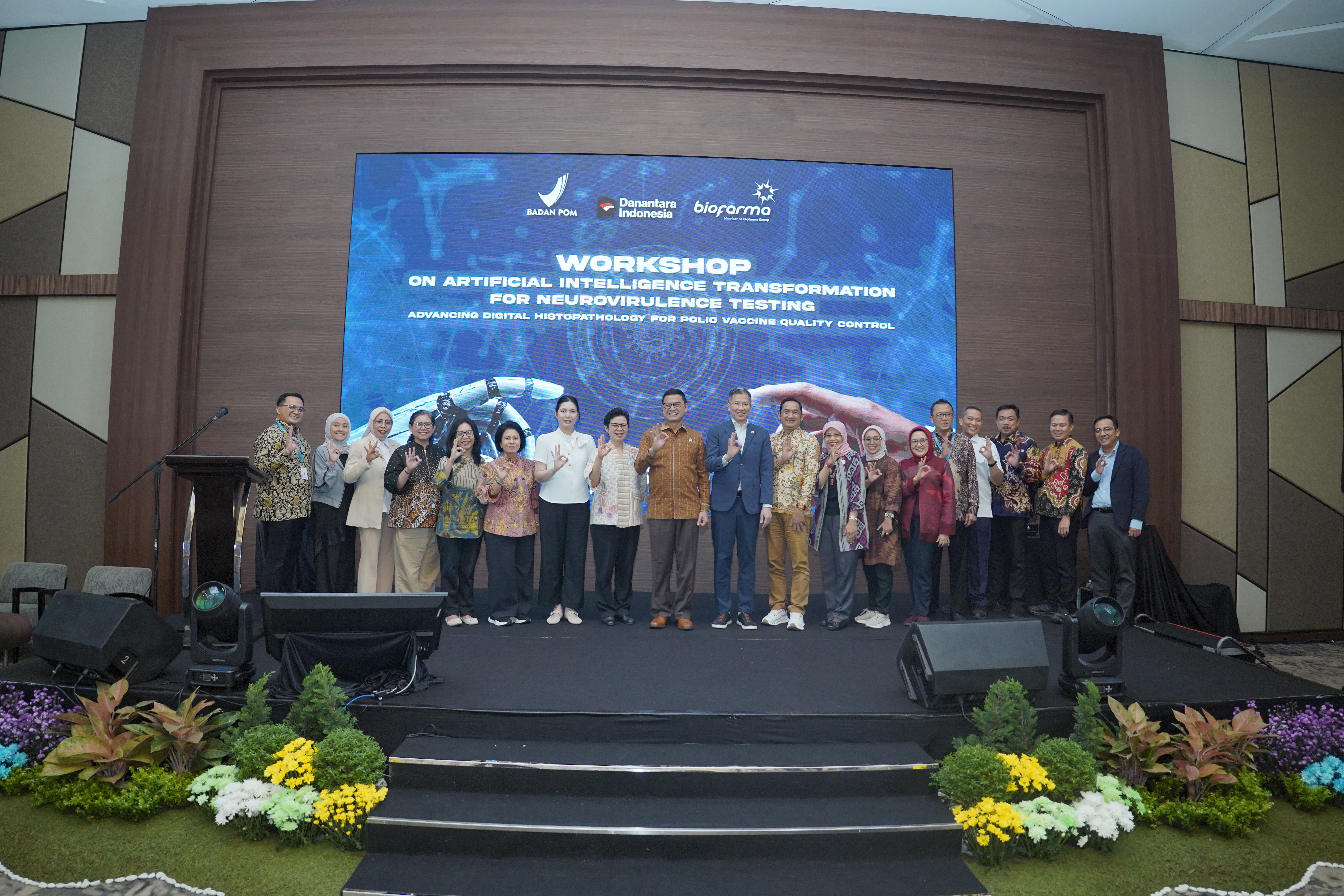
Bandung, 18 November 2026 – PT Bio Farma (Persero), the Indonesian Food and Drug Authority (Badan Pengawas Obat dan Makanan Republik Indonesia / BPOM RI), and academic experts discussed the application of artificial intelligence (AI) to assist analysts in interpreting histopathological images used in polio vaccine quality testing. These images are digital representations of nerve tissue specimens examined during the Neurovirulence Test (NVT).
Bio Farma hosted the Workshop on Artificial Intelligence Transformation for Neurovirulence Testing: Advancing Digital Histopathology for Polio Vaccine Quality Control in Bandung on Wednesday (18/11). As part of the ecosystem of Danantara Indonesia, Bio Farma continues to advance its transformation agenda by reviewing quality control (QC) processes, including how analysts interpret and evaluate laboratory images.
“Science must be the foundation of innovation. Scientific evidence must build trust,” emphasized Prof. dr. Taruna Ikrar, M.Biomed., Ph.D., Chairperson of BPOM RI. He noted that collaboration among regulators, industry, and academia is essential to safeguarding scientific integrity and ensuring that the development of testing methods prioritizes public health protection.
During the panel discussion, experts explored the application of digital histopathology in the Neurovirulence Test (NVT), particularly the use of AI to support analysts in evaluating changes in nerve tissue. They reviewed the evidence required to validate AI-assisted image interpretation and discussed the regulatory requirements that must be fulfilled before such methods can be implemented in routine testing.
Iin Susanti, Director of Operations at Bio Farma, stated that laboratory innovation can begin with improving the methods used by QC teams in their daily work. According to her, domestic technological capability also includes the ability of analysts to assess both the benefits and limitations of a particular method.
“As part of the Danantara Indonesia ecosystem, we interpret our transformation commitment into improvements in laboratory practices. Through this workshop, we are examining whether AI can help QC teams interpret histopathology images more consistently and efficiently. Before implementing it in routine testing, we must demonstrate that the results are reliable,” said Iin.
Bio Farma supplies polio vaccines for immunization programs in Indonesia and various countries worldwide. Its capability to both manufacture vaccines and conduct quality testing domestically supports this role while strengthening national health resilience.
“When children are due for immunization, vaccines must be readily available through accessible healthcare services and tailored to the needs of families. As a manufacturer, our responsibility is to ensure the quality of every vaccine they receive. That work begins in the laboratory, long before the vaccine reaches healthcare facilities,” Iin added.
This collaboration combines the experience of Bio Farma’s QC team, BPOM RI’s regulatory perspective, and academic expertise to evaluate the potential of AI for histopathological image interpretation. In line with the message delivered by the Chairperson of BPOM RI, every improvement in testing methods must be supported by scientific evidence to ensure accountable testing outcomes and maintain public confidence in vaccine quality.
For Media Inquiries:
Corporate Communications
PT Bio Farma (Persero)
Corcom@biofarma.co.id