ID
ID
 EN
EN

Bio Farma Strengthens Indonesia–Ghana Collaboration to Build Health Security through Vaccine Technology Transfer
 \
\
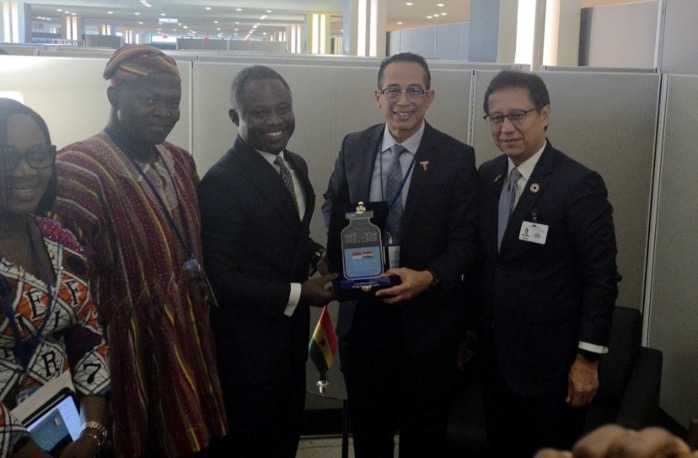
Bandung, September 29, 2026 – PT Bio Farma (Persero) continues to strengthen international collaboration to contribute to global health security while expanding Indonesia’s role at the international level. Through a strategic partnership with Atlantic Lifesciences (ALS), Ghana, Bio Farma is implementing a technology transfer program for tetanus and diphtheria (Td) vaccines to support the development of local vaccine manufacturing capacity in Ghana.
The collaboration represents Indonesia’s contribution to strengthening the capacity of developing countries to establish more self-reliant and sustainable vaccine production capabilities, particularly in West Africa.
The collaboration between Bio Farma and ALS has entered the technical implementation stage following a series of strategic milestones, beginning with the signing of the Memorandum of Understanding (MoU) in December 2023, followed by the signing of the Master Agreement for Td Vaccine Technology Transfer in September 2024, and the implementation agreements, namely the Tech Transfer Agreement and Sales Agreement, in August 2025.
Through this program, Bio Farma serves not only as a vaccine supplier but also as a technology and manufacturing capacity development partner. Bio Farma provides technology, technical assistance, and Td Final Bulk Ready to Fill (RTF) supply, while ALS will develop local capabilities for fill-finish, Quality Control (QC), packaging, registration, and commercial manufacturing in Ghana.
President Director of Bio Farma, Shadiq Akasya, said that strengthening health security requires cross-border collaboration that goes beyond product supply and also builds production capabilities, human resources, and a sustainable healthcare industry ecosystem.
“The partnership between Bio Farma and Atlantic Lifesciences is a concrete contribution by Indonesia to strengthening global health security. Through technology transfer, we aim to grow together with our partners by building manufacturing capabilities and human resources, enabling partner countries to further strengthen their capacity to meet the healthcare needs of their populations,” said Shadiq.
According to Shadiq, the project is currently progressing toward a key stage, namely Process Performance Qualification (PPQ) or process validation, which is planned to take place from October 2026 to January 2027. This stage will be followed by the registration process and inspection by the Ghana Food and Drugs Authority (Ghana FDA) from January to May 2027.
If the validation process is successfully completed, stability data meet the requirements, regulatory approval is obtained, and procurement readiness is achieved, commercial supply of Td vaccines through the local facility in Ghana is targeted to begin in 2027.
In the long term, the collaboration also creates an opportunity for Ghana to develop into a vaccine manufacturing and supply platform for the West African region. This development will be carried out gradually, taking into account the registration requirements, regulations, and mechanisms applicable in each country.
The Td vaccine technology transfer program is also part of the development of Bio Farma’s license-out and technology transfer-based business model. Through this approach, Indonesia’s contribution to international markets is not limited to the export of finished products, but also includes the transfer of knowledge and technology, human resource development, and the strengthening of healthcare industry capabilities in partner countries.
The collaboration between Bio Farma and ALS also represents a concrete example of South-South Cooperation between Indonesia and Ghana in the areas of health security, local manufacturing, and capacity building. The Briefing Note identifies the project as one of the concrete implementations of Indonesia-Ghana cooperation in health security, local manufacturing, and capacity building.
As part of the Danantara ecosystem, Bio Farma also continues to encourage its international collaborations to generate broader value for communities and Indonesia. The development of vaccine manufacturing capacity is expected to contribute to improved access to healthcare products while strengthening human resource capabilities and the healthcare ecosystem in partner countries.
The collaboration demonstrates the capability of Indonesia’s strategic industries to bring technology, knowledge, and manufacturing capabilities to international markets. The technology transfer and license-out models also provide opportunities for Bio Farma to expand its business model and strengthen the competitiveness of Indonesia’s healthcare industry globally. Technology transfer and local capacity building are aimed at creating long-term benefits. The collaboration goes beyond product sales by building production capabilities and knowledge that can continue to develop and benefit future generations.
“We want to demonstrate that Indonesia can contribute further to the global healthcare ecosystem—not only through the products we produce, but also through technology, knowledge, and collaboration. As part of the Danantara ecosystem, Bio Farma will continue to drive performance and international expansion that contribute to improving people’s quality of life, strengthening Indonesia’s competitiveness, and creating sustainable value,” added Shadiq.
Through its collaboration with Atlantic Lifesciences, Bio Farma reaffirms its commitment to advancing partnerships that strengthen health security while expanding Indonesia’s international contribution by bringing the capabilities of the national healthcare industry as part of the solution to global healthcare needs.
--o0o--
For Media Inquiries:
Corporate Communications
PT Bio Farma (Persero)
Corcom@biofarma.co.id